The Unadorned

My literary blog to keep track of my creative moods with poems n short stories, book reviews n humorous prose, travelogues n photography, reflections n translations, both in English n Hindi.

Wednesday, August 13, 2025

कमल की तलाश में

--------------

मेरी पिछली पोस्ट एक छोटा-सा किस्सा था, जिसे मैंने “कमल की तलाश में” शीर्षक दिया था। मुझे खुशी है कि इसे मेरे पाठकों ने खूब सराहा। अब मैं उसका हिंदी संस्करण प्रस्तुत करने जा रहा हूँ, उन पाठकों के लिए जो इसे हिंदी में पढ़ना पसंद करेंगे।
आनंदपूर्वक पढ़िए।

---------


कमल की तलाश में

कमल से लबालब एक तालाब के प्रेम में मैं अपने शहर के बाहरी इलाके के एक दूर के गाँव तक जा पहुँचा। आजकल ऐसा तालाब ढूँढना आसान नहीं। मछली पालन ने गाँव के तालाबों की शक्ल ही बदल दी है — अब वे कमल के लिए नहीं, मछली के लिए अनुकूल बनाए जाते हैं। लेकिन यहाँ, खेतों के बीच, एक शांत जलराशि थी, जिसमें खिले सफ़ेद कमल ऐसे तैर रहे थे मानो किसी पुराने समय की याद हों, और उनकी सुगंध हवा में किसी भूली-बिसरी धुन की तरह बिखरी थी।

मैं अकेला नहीं था। थोड़ी दूरी पर एक आदमी खड़ा था, फूलों को ऐसे देख रहा था जैसे हर पंखुड़ी का मोल तौल रहा हो। मैंने सोचा, चलो, एक और कमल-प्रेमी मिला। पास गया तो चेहरा जाना-पहचाना लगा। यह कोई सामान्य पहचान नहीं थी — एक ठोस याद थी। उसके ऊपरी होंठ की कटावट वही थी, जो अड़तालीस साल पहले थी।

उससे मेरी पहली मुलाक़ात एक बिल्कुल अलग माहौल में हुई थी — भीड़ के बीच, पुलिस लाइन के बाहर, अस्थायी सिपाही की भर्ती के इंतज़ार में। सन 1977 की गर्मी थी। मैं अपने स्नातक के अंतिम वर्ष में था; चुनाव गर्मियों की छुट्टियों में आ गए थे। प्रस्ताव सीधा था: एक महीने तक मतदान केंद्रों और मतपेटियों की रखवाली, और मेहनताना 550 रुपये। उस समय जब चावल तीन रुपये किलो था, तो यह एक महीने में लगभग नौ महीने के खाने-पीने का ख़र्च कमा लेने जैसा था।

मगर नौकरी हाथ नहीं लगी। न ऊँचाई की कमी से, न स्वास्थ्य की वजह से, बल्कि ज़ुबान की फिसलन से। मेरा कॉलेज रोल नंबर 145 था। भर्ती नंबर 345। जब अफ़सर — शायद कोई पुलिस इंस्पेक्टर — ने नंबर और नाम पूछा, तो मैंने “145” और अपना नाम बता दिया। गलती का एहसास होते-होते मौका हाथ से निकल गया।

इस तरह 550 रुपये — और नौ महीने के खाने का इंतज़ाम — खो गया। लेकिन उस दिन मेरे आगे कतार में खड़ा वह आदमी मेरी याद में रह गया। कटे होंठ वाला चेहरा — ऐसा विवरण जो कभी भुलाया नहीं जाता, इसलिए नहीं कि वह अजीब है, बल्कि इसलिए कि वह पूरे दृश्य को स्मृति में पिन कर देता है।

और अब, लगभग आधी सदी बाद, वह मेरे सामने खड़ा था — कमल से भरे तालाब के किनारे।

“मुझे पहचानते हो?” मैंने पूछा।

उसने सिर हिला दिया।

मैंने फिर कोशिश की — “1977… पुलिस ऑफिस के बाहर… अस्थायी सिपाही की भर्ती…”

अचानक उसकी आँखों में पहचान कौंधी। और उसकी आवाज़ — वही, जैसी मुझे याद थी — लोहार की भट्टी में हवा भरते धौंकनी की तरह, आग को तेज़ करती हुई। उसने न केवल वह घटना याद की, बल्कि मेरी गलती भी हूबहू दोहराई, और उस पुरानी दोपहर की गरमी को अपनी हँसी में लौटा लाया।

फिर उसने ऐसी बात कही, जिसकी मुझे उम्मीद न थी — “इस तालाब को जानते हो?” उसने पानी की ओर इशारा किया। “उस समय, चुनाव ख़त्म होने के बाद, हमें मज़दूरों की तरह काम पर लगाया गया था। हम सबने मिलकर इसे खोदा था — मैं और बाकी अस्थायी सिपाही।”

मैंने तालाब की ओर देखा — सफ़ेद कमल, जैसे पानी में तैरते चाँद; उनकी हल्की-सी खुशबू हवा में घुली। यह सौंदर्य उन्हीं हाथों की फफोले और पसीने से पैदा हुआ था, उन लोगों से जो समझते थे कि वे बस चुनावी ड्यूटी के बीच वक़्त काट रहे हैं।

कटा होंठ वाला आदमी न केवल मेरे छोटे-से असफल क्षण का गवाह था, बल्कि उस जगह का सर्जक भी था, जिसे देखने मैं यहाँ तक चला आया था। जिस तालाब को मैंने दूर से चाहा था, वह सचमुच उसका बनाया हुआ था।

कभी-कभी अतीत हमें डराने नहीं, बल्कि फूल थमाने लौटता है।

---------------------------

By

Ananta Narayan Nanda

Bhubaneswar

13/08/2025

---------------------------------- 

Labels: , ,

Monday, August 11, 2025

In Quest of Lotus


-----------------------------------
Promotional Text:-

Please get an ebook of my novel, "IVORY IMPRINT", by visiting the Amazon portal at https://amzn.in/d/42T5Qmu

Please get a paperback copy of my novel "Ivory Imprint" , by visiting the Amazon portal at the link https://amzn.in/d/69KH5qc

Please get an ebook of my Short Story Collection, MidnightBiryani and Other Stories , by visiting the Amazon portal https://amzn.in/d/dR7bGmO

Please get a paperback of my Short Story Collection, MidnightBiryani and Other Stories , by visiting the Amazon portal https://a.co/d/czwKpTu

Please get an ebook of my Short Story Collection, Stories Old and New , by visiting the Amazon link  https://amzn.in/d/4LJB6WW

Please get a paperback of my Short Story Collection, Stories Old and New , by visiting the Amazon link  https://amzn.in/d/iLtZAwc 

Please get an ebook of my Short Story Collection, The Remix of Orchid , by visiting the Amazon link  https://amzn.in/d/eLPcHk2

Please get a paperback of my Short Story Collection, The Remix of Orchid , by visiting the Amazon link https://amzn.in/d/9y7cAXF

Please get an ebook of my Short Story Collection,  TheLegacy: Tales from the Postal Trail , by visiting the Amazon portal https://amzn.in/d/02gtbab

Please get a paperback copy of my Short Story Collection, TheLegacy: Tales from the Postal Trail by visiting the Amazon portal https://amzn.in/d/8u41U6Y   


In Quest of Lotus 

---------------

Here is a story in English, anecdotal and endearing. Sometimes, the past comes back not to haunt you, but to hand you a flower--that's how I concluded my story. For those who would like to read the story in Hindi, I'll post its Hindi translation in a day or two.

---------------

It was for the love of a lotus tank that I went to that far-off village on the outskirts of my hometown. Nowadays, finding such a pond is no easy thing — fish-rearing has changed the very character of village tanks, making them practical for commerce rather than hospitable to lotus. But here, in the middle of quiet fields, was a sheet of still water flecked with the white of full-bloom lotus, their fragrance drifting in the air like something that belonged to another age.

I wasn’t alone. A man stood a little distance away, gazing at the flowers as if weighing each petal’s worth in his mind. Finding a fellow appreciator, I walked up to him. There was something familiar in his face. Not just a vague familiarity — a certainty. The cleft in his upper lip had not changed in forty-eight years.

I first saw him in a very different setting: among a jostling crowd outside the police lines, waiting to be recruited as temporary constables. It was the summer of 1977. I was waiting for the classes to resume in my final year of graduation; the elections had come during the vacation. The offer was simple: a month’s duty guarding polling booths and ballot boxes, for a wage of 550 rupees, at a time when rice cost three rupees a kilo, which meant nearly nine months of my mess expenses — just for a month’s work.

I didn’t get the job, not for lack of height or health, but for a slip of the tongue. My college roll number was 145. My recruitment number was 345. When the officer — perhaps a police inspector — called me, he asked for my number and name. I gave him “145” and my name. By the time I realised my mistake, my chance had gone.

That was how 550 rupees — and nine months of food — slipped away from me. But the man standing before me in the queue that day stayed in my mind. A face with a cleft upper lip — the kind of detail you never forget, not because of its oddity, but because it pins a whole scene to memory.

And here he was again, nearly half a century later, on the embankment of a lotus tank.

“Do you remember me?” I asked.

He shook his head.

I tried again. “In the year 1977. Outside the police office. Recruitment for temporary constables…”

The recognition came suddenly. His voice was just as I remembered it — like a blacksmith’s bellow feeding a forge, air rushing into fire. He not only recalled the incident, he recounted my mistake word for word, laughing in that rough, smoky way that seemed to carry the heat of those old afternoons.

And then he added something I hadn’t expected. “You know this tank?” he said, nodding at the water. “Back then, after the election, they put us to work as labourers. We dug it. The other temporary constables and I.”

I looked out over the tank — the white lotus floating like small moons, the faint scent of their pollen riding the breeze. This beauty had sprung from the blisters of those hands, the sweat of men who thought they were only passing time between polling days.

The man with the cleft lip had not only been a witness to my small failure; he had been the creator of this place I had come so far to see. The pond I had loved from a distance was, quite literally, his handiwork.

Sometimes, the past comes back not to haunt you, but to hand you a flower.

------------------------

By

Ananta Narayan Nanda

Bhubaneswar

11-08-2025

-----------------------------

Labels: ,

Saturday, August 16, 2014

To Refresh n Relive

----------------------------
Like the charm of old letters, old photographs attract. I think it's worth the effort to revisit the album. It helps; it's so very refreshing...
---------------------------
Shimla at Night:The Nocturnal Glory
The Peeping Moon: Sojah Valley, Kullu
Oodles of Golden Apples
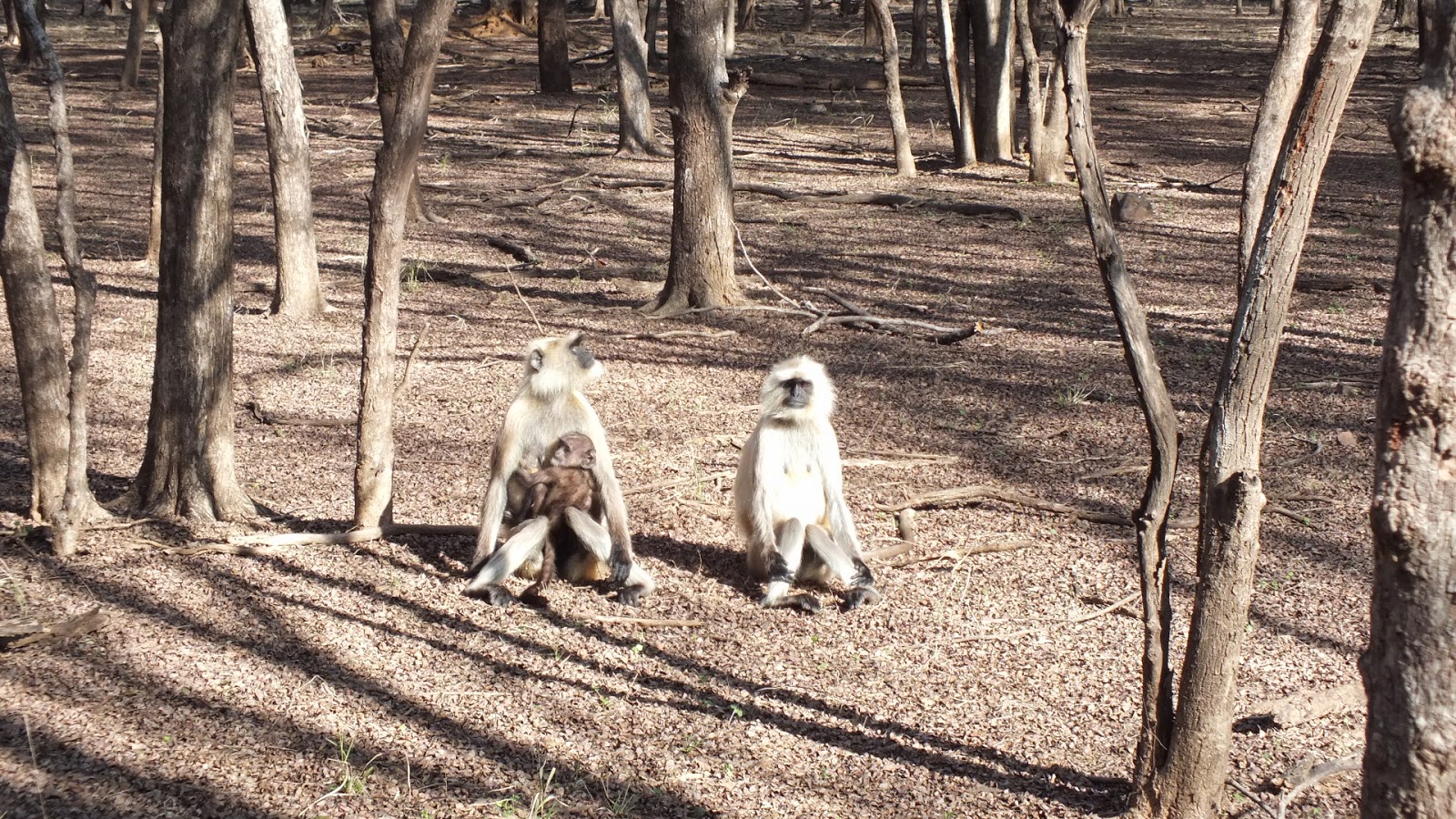
The Mother and Baby
Treepie Posing for a Snap: Ranthambhor National Park
Believe it: It's the Road to Sach Pass
Hum Do, Hamare Ek
Amateur Photography: Aut Tunnel
A Perfect Sunny Valley
Rhododendron: the Flower of Flowers
The Setting Sun
The Lake Garden: Amber Fort
-----------------------
By
A. N. Nanda
Shimla
16-08-2014
-----------------------

Labels:

Friday, August 01, 2014

The Aroma Wafts on...


The Aroma Wafts on...


 It is a question that oftentimes bothers me: If I were not the one what I’m now known for or, more precisely, known to my friends as, what else would I have become? A farmer, for all that quiet pleasure I always find at the mere glimpse of an expansive paddy field undulating into sparkling waves in the swishing September breeze? Or a gardener, for all the rapture a sapling sends me into as it grows from strength to strength, from its dainty existence into its fragrant efflorescence? Or a teacher to root out the rote learning that catapulted all the obedient kids of my time into the legendary gold medalists? Or a crusader against poverty, seeing people offering their dilapidated aluminium bowl on pawn for a bowlful of water-rice? Or an entrepreneur, for all my readiness to struggle and suffer and learn and excel? Or a writer trying to identify with the environs and gain insights into the phenomenon called relationship? Or a philosopher bent on unravelling the purpose of existence? Or a priest? A thief? A beggar? What exactly would I have become had I not been pushed into the stream and chosen to swim downstream? Where is my alter ego that has been eluding me for ever?

The other day I met him, my alter ego—I think I met him. I met him in a party, amongst my friends; say among some thirty of us who could assemble for a nostalgic get-together. It was a kind of reunion of all those who passed out from Utkal University, Vani Vihar in the year 1980. Not all of us were present, but the crowd was compatible enough to rekindle my feelings and guide me straight up to my insight where lay the answer to my question.

‘Aha! You Nanda. Do you remember me? I’m the same XYZ that lived upstairs, the room above you in the third floor, while yours was the one in the ground floor?’

‘Well, Well, you’re MNO, I know, you’re living upstairs in the third floor of our Fourth Hostel while I occupied the room in the ground floor, right?’ I faked as if his tone had kindled enough.

‘We’re meeting after forty-three years, you know, after donkey’s years,’ he spouted. I knew we were meeting after thirty-three years. It was an inconsequential arithmetic slip-up on his part, a rounding-off error. And I ignored.

‘Meet my wife…and tell her how I was like forty-three years ago,’ I introduced my wife to him. ‘Meet my most bosom buddy who lived two floors above me, the floors important pupils used to choose to avoid mosquitoes.’

‘Ha-ha!’ No doubt my words made him happy. He was, in fact, important in my view. And he continued to spout, ‘Nanda used to cook excellent dalma and we’re the beneficiaries of its rich smell, day in day out.’ I was happy too, for my friend did exactly as I intended him to do: unknowingly he had opened a PR blitzkrieg to impress my lifelong critic, my wife.

She proved an attentive listener every inch. And she was curious too, to discover what I was like when she had not extended me the benefit of all the sublimating and civilizing strokes that, according to her, I badly needed then. Every saint has a past…and…and a woman is nothing if not a born investigator!

But I was suddenly reminded of my nagging question: ‘If I were not the one what I’m now known for or, more precisely, known to my friends as, what else would I have become?’ I’d have become a cook, or to choose a more glorious word, a chef. Forty-three years ago, thirty-three to be precise, I had enough talent to impress my friend living upstairs merely by the scent of my pan and ladle. Not a joke!

Let me flash back…back…and still back. My first cooking lesson started when I was a thirteen-year old greenhorn. My teacher was my necessity; my stove was one that was of cutting-edge technology then, a sawdust hearth that was to be vigorously stuffed; and a meticulously lit kerosene-smeared plank in the middle shaft-tunnel was to make the surrounding wall of sawdust smoulder and burn. No issue—I had succeeded in a single session even though the sawdust was damp.

This is how I understood how different was salt from sawdust!

Then...then I learnt so many things, all by self-effort. It needs less of labour to make batter out of wheat flour than to knead it into dough—a discovery that helped me to make pancake as tasty as those loaves of fresh bread sold in the streets of Old Delhi during Ramzaan. I became nutrition conscious and added egg to the batter…and the result was marvellous. The pancake bloated like puri swimming on bubbling hot oil. A friend asked me, ‘What’s the name of the recipe?’ and I remember to have replied, ‘Well, it’s Italian Pizza.’ And by the time my friend got the proof of my culinary talent from the aroma of my dalma, it was six long years after I was introduced to the sawdust hearth. No wonder I was experienced then. So skilled I was then and so uninterrupted was my progress since my acquaintance with salt and sawdust that another friend of mine at Rourkela, after savouring the meal I had served him a couple of years thereafter, advised me: ‘I don’t want you to suffer owing to your skill. Your wife is going to make a cook out of you. In order to avoid being a lifelong cook in your own house, you’ve to forget everything. I say this in your interest only. Why don’t you understand, buddy?’

Fast forward…. Somehow I forgot what I learnt so early in life—I won’t blame my friend for that. He had merely discharged his friendly duty, warned me to be careful. Aha! The good old days! Now I am like a precocious school boy turning into a half-witted dullard by the time he reaches his high school. I’m like a marathon runner finishing the last even though as a nine year-old boy he had come on the front-page news running fifty miles at a stretch. But I continue to be an eater, a committed eater of sort: more people are interested in feeding me now than in helping me to refresh my culinary skill. What a change! The wheel has turned a full circle.

But my only satisfaction is that I can still make out salt from sawdust. I have retained at least this much of basics, even to this day. Nobody can forget cycling and swimming: it’s as ingrained as that.

And I’m convinced; I would have become a good cook had I not decided to do hundred other things my way, had I not been pushed into the stream and chosen to swim downstream, the easy way. The other day I met my alter ego—I think I surely met him, thanks to the billowing aroma of dalma my dear old friend is still able to smell after forty-three years have elapsed. Nay, to be precise, it was an aroma that had once wafted up to the third floor of a hostel room some thirty-three years ago.
-----------------------------
By
A N Nanda
Bhubaneswar
01-08-2014
----------------------------- 

Labels: ,

Thursday, August 01, 2013

Baba Balak Nath--In a Sylvan Setting

____________________________________
Places and people spark new ideas in me, very much like my after-sleep thoughts or in-dream reflexes. I've always struggled to retain them but it has never been a one-hundred percent success. Sometimes--oh yes--I do succeed. Here's what I felt while visiting the place of Baba Balak Nath of Deotsidh...and I'm satisfied with that feeling.
_________________________________ 
The other day I visited the temple of Balak Nath of Deotsidh. Situated between Barsar and Ghumarwin on a good motorable hilly road very close to Govind Sagar reservoir of Bhakra-Nangal Project, it is a small cave on a hilltop, develped as a religio-tourist spot where people in large number throng throughout the year. I was told the rush is almost unmanageable in the summer. It is understandable considering the popularity of the place as a preferred destination among all those religious-minded tourists, and the narrow passage leading to the cave. On the day of my visit, fortunately enough, it had no big crowd to bother me and its relative quietude definitely appealed me. More than the temple, I liked the aerial view of the valley down the hill, its silvan greenery merging gloriously with the waterscape of the reservoir and its cool ambience all around.
Hills with Holy Ambience
The presiding deity of the cave is not one from the familiar Hindu pantheon; rather it is a Baba or a monk/mendicant who had attained height of spiritual power. Before I visited there, I wished to know the story around the place. That was how I thought of quickly imbibing the religious mood, a prerequisite for imparting meaning to what I was doing then. I hated the idea that the occasion should pass me by as a mere perfunctory diversion, a lunch-time recreation. “Good people should go to good places”—Nope, it’s a statement that smacks of casualness and I wanted to prove every inch that I really deserved the opportunity given to me by god. The Assistant Temple officer, one Mr Patiyal by name, obliged me telling me the story.
Amidst the Mist and Quietude
Once upon a time Baba Balak Nath came there as a child and got the employment as a cowboy in the family of an old woman named Ratno. He worked as such for twelve years. And then one day the neighbours of Ratno vociferously complained against the boy since he had been utterly negligent of his duty, allowing cattles to run astray and damage the neigbours’ crop. Ratno got angry with the boy and chided him, saying that she had been feeding him for twelve years whereas he never bothered to be sincere. Baba replied that he had never eaten the food given to him by Ratoni and showed her everything she had offered him all those years. That is how a lake of butter milk “Shahtalai” was created. Then Baba Balak Nath disappeared.
The story I listened to was only too interesting, bereft either of any confusing tidbits or of a plethora of mythological cross-references. Maybe, what I was told was mere barebones and it was not a word too long. So I thought I had understood what was imparted to me. Now that I knew at least something about the place, I felt I should offer some of my own interpretations of what I understood. And I narrated that back to the temple officer.
And what was that?
Here, in the story, we’ve a mother offering food, getting angry (possibly artificially); and a Baba showing that even if he has been eating to survive, he has preserved everything offered to him during twelve long years. So, mother Ratoni is the symbol of Mother Nature whose bounties we should use the way Baba Balak Nath used the food of Ratoni. That is the way, the only sensible way open to us. There is no way that we can take the generosity of Mother Nature for granted. We should use everything offered by her and yet leave it as it is without damaging a branch of the tree or removing a rock of the hill slope. Or else Mother Nature will have an angry reaction which is perfectly justified. Is it not the way we now interpret the cataclysm of Uttarakhand? This story contains a great conservation message. We would only miss it at our peril.
Speaking as I Felt
And when time to say goodbye arrived, I was offered to write something in the visitor’s book. Spontaneously, articulating what I had felt about the story, I scribbled:—
This is a place sanctified by the action of somebody great who had once taken human shape to perform divine activities, now remembered and revered by the posteriors. Baba ate everything but had also kept everything intact to be produced after twelve years. This is how we humans should treat our Mother Nature—enjoying her bounties yet keeping them intact for future to be enjoyed by our posteriors, even after 12 years, 12 thousand years and 12 million years… This is the message I’d like to take with me.
Sd/--
A.  N. Nanda
24-7-2013
----------------------------------
By
A N Nanda
Shimla
2-8-2013
---------------------------------- 

Labels: , ,